If it carries gas, only a registered engineer should touch it.
Every metre of gas pipework in your property — from the meter to your boiler, cooker, fire or hob — must be installed and modified by a Gas Safe registered engineer. This isn't optional. Unregistered gas work is illegal, invalidates your insurance and puts lives at risk.
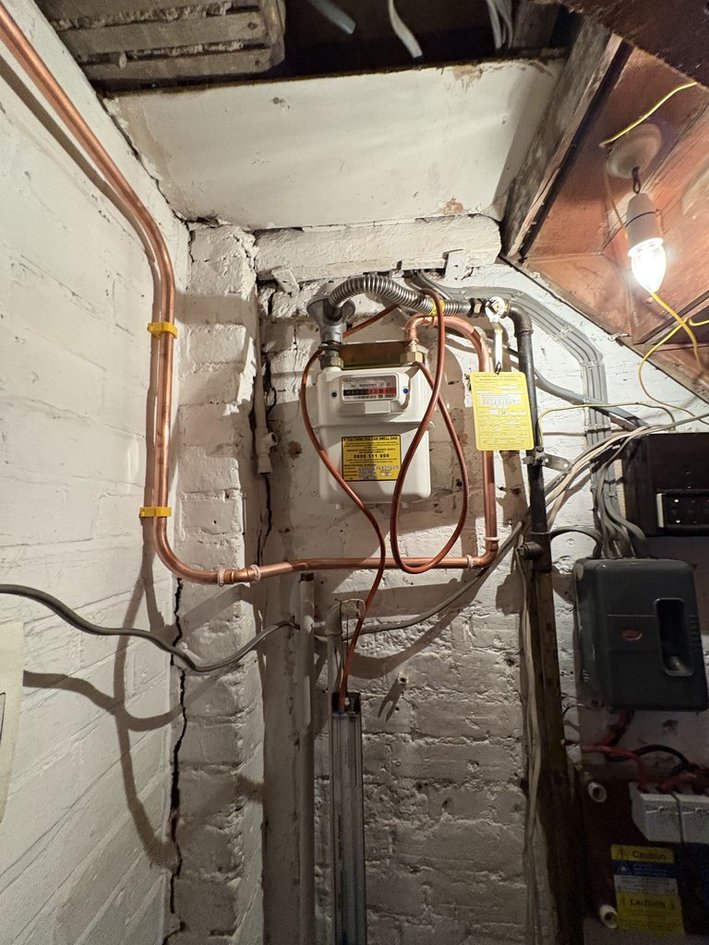
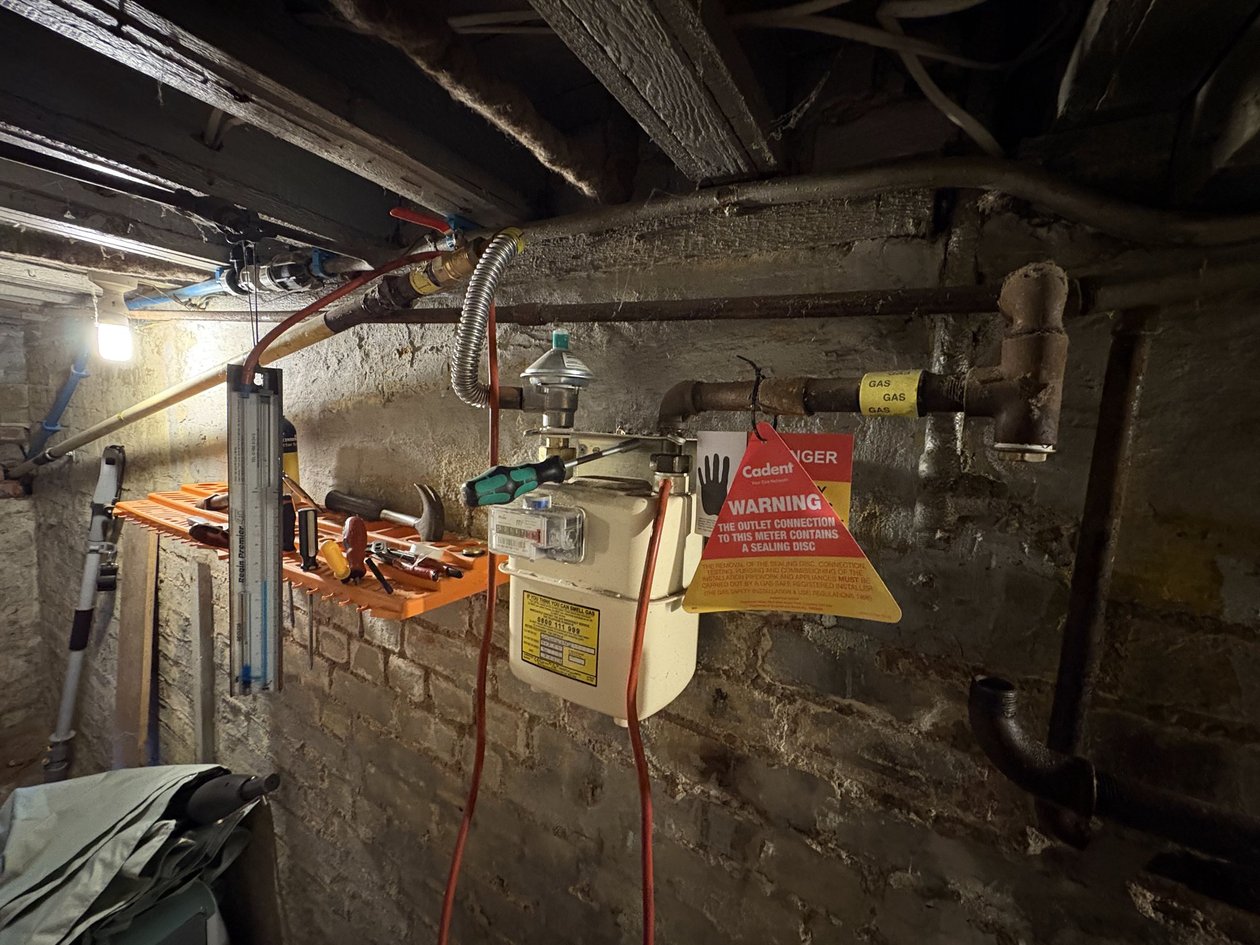
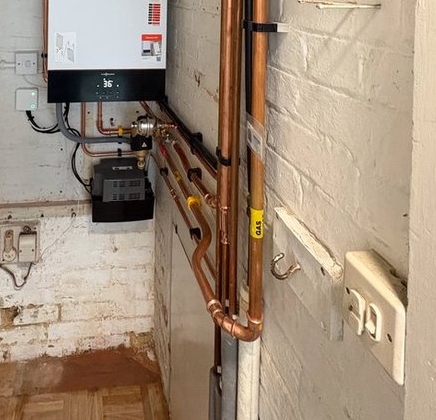
We're Gas Safe registered and carry out all gas pipework work to the relevant standards, issuing Gas Safe documentation on completion. If work requires notification to your gas network operator, we handle that too.
Can you smell gas right now?
Don't call us first. Turn off the gas supply at your meter — usually outside, under the stairs, or in a kitchen cupboard. Open windows and doors. Don't use any electrical switches, including light switches. Don't smoke or use naked flames. If you have any concern about safety, leave the building. Then call:
0800 111 999National Gas Emergency — free, 24 hours a day. Once declared safe, call us on 0208 050 4729 to arrange the repair and documentation.
What we do
Gas Leak Tracing
We use electronic combustible gas detectors that identify concentrations far below what the human nose can detect. We trace methodically — joints, valves, connections, pipe runs — until we find the source, usually within the same visit.
Gas Leak Repair
Once located, we carry out the repair — replacing the affected joint, fitting, valve or pipe section — then pressure-test the entire system before reconnecting the supply. Gas Safe documentation is issued on completion.
New Gas Supply Runs
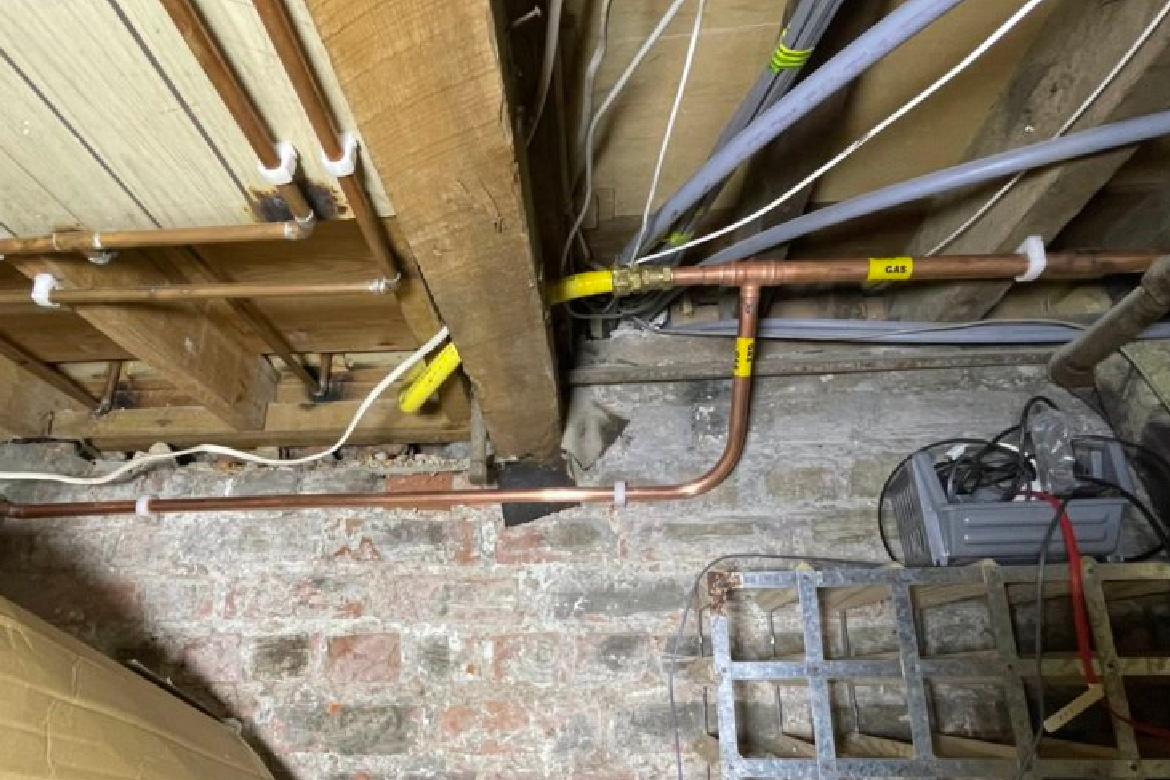
Adding a gas appliance where there's currently no supply? We design and install new gas pipework runs — from the meter to wherever you need it — sized correctly for the appliance and installed to current standards.
Gas Pipe Re-routing
Renovation work exposing buried pipework? Boiler being moved to a new location? We re-route gas pipework safely, correctly and with all the appropriate isolation and documentation required.
Pipework Upgrades (Upsizing)
Replacing an old boiler with a larger one, adding a gas range cooker or commercial appliance? Your existing pipework may not be sized to deliver the required gas volume. We assess and upsize as needed.
Aged & Deteriorated Pipework
Old steel pipework, corroded fittings or outdated compression joints that have been leaking for years? We replace like-for-like with modern copper pipework to current standards — no patchwork fixes.
Thinking ahead? Your gas pipework might not be ready.
Many properties — particularly older ones — have undersized gas pipework. The existing pipework was sized when the property was first connected, often for appliances that used more gas less efficiently. A modern high-efficiency boiler, a gas range cooker and an outdoor kitchen gas supply all have specific flow requirements that your existing pipework may not meet.
We carry out gas supply assessments — measuring the existing pipe size and pressure, calculating the demand of all appliances, and advising whether your current pipework is adequate or needs upgrading. This is especially relevant before installing a new boiler, adding a large appliance, or converting a commercial kitchen to gas.
High-output boilers need adequate gas volume. We check supply before installation to avoid under-performance.
A professional gas range has a very high gas demand. Standard domestic pipework is often inadequate — we upsize where needed.
Converting premises to a commercial kitchen? Gas infrastructure needs to match the planned appliance load. We design and install the full supply.
How a gas leak repair works
Call us
If you suspect a gas leak that has already been made safe by the National Gas Emergency line, call us to arrange a visit. We'll advise on what to do in the meantime.
Engineer visit & electronic detection
We attend with calibrated electronic gas detection equipment. We trace the pipework methodically — testing at joints, valves, appliance connections and any buried or concealed pipe runs — until the source is confirmed.
Clear quote before any work starts
Once we know exactly what the repair involves, we give you a clear fixed price before we start. No surprises.
Repair & pressure test
We carry out the repair — replacing the affected section, fitting or joint — then conduct a full tightness test of the pipework before reconnecting the gas supply.
Gas Safe documentation issued
We issue a Gas Safe record confirming the work carried out, that the system has been tested, and that it is safe to use. This is a legal document — keep it safe.